 My Favorite Handyman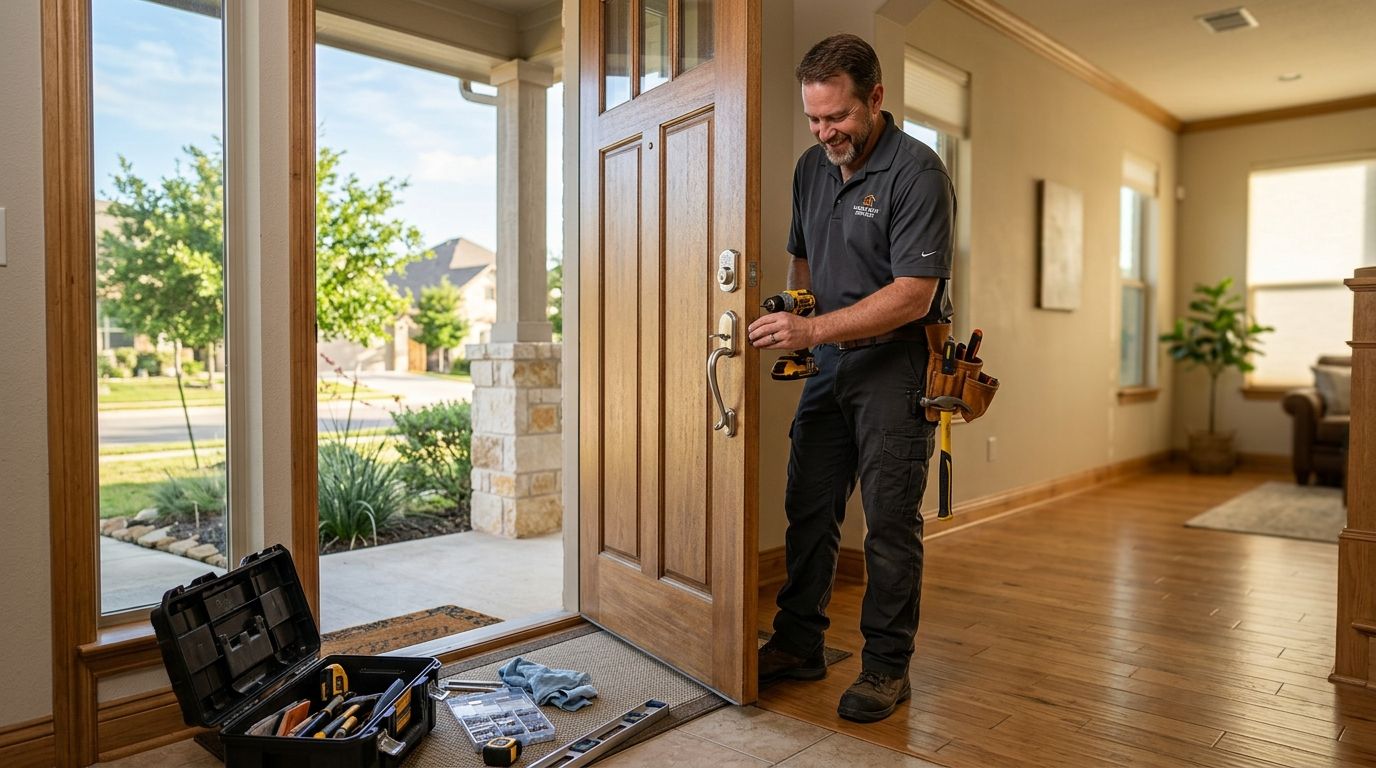
Leander homeowners searching for handyman leander tx services in 2026 have more options than a single business name can cover — from solo repair guys to full-service remodeling crews. Best overall for multi-trade projects: My Favorite Handyman, serving the Round Rock, Cedar Park, and Austin corridor with repair, remodeling, painting, drywall, and tile work. Best for one-off quick fixes: an independent local handyman. Best for ground-up renovations: a licensed general contractor.
- My Favorite Handyman covers repair, remodeling, painting, drywall, and tile from one crew, best for multi-trade Leander projects in 2026.
- Independent handymen fit small, single-item repairs but don't scale to full bathroom or kitchen remodels.
- Specialty trade contractors matter when tile or drywall finish quality is the priority over speed.
- General contractors are the right call for permitted, structural, or ground-up renovation work.
- Texas doesn't require a statewide license for most residential handyman repairs, so ask about insurance instead.
Why this matters
Leander sits roughly 30 miles northwest of downtown Austin, and the fast growth along that corridor has pulled in everyone from single-truck handymen to national franchise crews. Picking the wrong type of provider for the job costs you a second call, a second wait, and a second mess to clean up.
A cracked tile backsplash and a full bathroom gut are not the same job, and they don't need the same kind of company. This guide ranks five categories of handyman leander tx options by the project they actually fit best, not by who has the biggest ad budget.
What makes the best handyman company
- Trade breadth — can one crew handle drywall, paint, and tile in the same visit, or do you need three separate calls
- Insurance and bonding — Texas doesn't require a state contractor license for most residential repair work, so ask directly about liability coverage
- Communication before the work starts — a written scope, not a verbal guess
- Portfolio of comparable projects — bathroom remodels, drywall patches, or tile layouts similar to yours
- Response time on the first call — how fast a real person picks up versus a voicemail loop
Handyman leander tx options at a glance
| Option | Best for | Standout feature | Key limitation |
|---|---|---|---|
| My Favorite Handyman | Multi-trade repair & remodeling | Repair, paint, drywall, tile, and bathroom remodel under one crew | Scheduling depends on crew availability, not instant same-day walk-ins |
| Independent local handyman | Small single-item repairs | Low overhead, fast for one-off jobs | Rarely covers permitted or structural work |
| Specialty trade contractor | Tile or drywall finish work | Deep focus on one trade, sharper finish quality | Won't touch unrelated repairs in the same visit |
| Licensed general contractor | Large permitted renovations | Handles permits, structural changes, subcontractor coordination | Overkill and slower for a single small repair |
| National handyman franchise | Standardized, insured service calls | Consistent intake process and paperwork | Less flexibility on project scope than an independent crew |
1. My Favorite Handyman: best handyman leander tx option for multi-trade projects
My Favorite Handyman operates out of the Round Rock, Cedar Park, and Austin corridor, a short drive from most Leander addresses, and handles repair, remodeling, painting, drywall, and tile work under one crew. The pitch is straightforward: instead of hiring a painter, then a drywall patcher, then a tile setter, one team scopes the whole project.
My Favorite Handyman pros:
- One point of contact across painting, drywall, tile, and bathroom remodel work
- Covers both quick repairs and larger renovation projects
- Direct communication on scope before work starts
My Favorite Handyman cons:
- Doesn't function as a ground-up general contractor for new construction
- Scheduling depends on crew availability rather than instant walk-up service
Best for: Leander homeowners with a project touching more than one trade — say, a bathroom that needs drywall repair, tile, and paint in the same job.
Verdict: Recommended for multi-trade repair and remodeling work.
2. Independent local handyman: best for small, single-item repairs
An independent handyman is usually a solo operator or a two-person crew running lower overhead than a company with an office and a fleet. That translates to faster availability for a single task — a leaky faucet, a loose fence board, a stuck door.
Independent handyman pros:
- Often the fastest response for one small job
- Lower overhead can mean more flexible scheduling
- Direct relationship with the person doing the work
Independent handyman cons:
- Rarely equipped for permitted or structural changes
- Coverage and insurance vary widely from one operator to the next
- No backup crew if the one person is unavailable
Best for: A single repair task that doesn't touch multiple trades or require a permit.
Verdict: Situational pick. Fine for one job, not a fit for a full remodel.
3. Specialty trade contractor: best for tile or drywall finish quality
Some projects live or die on finish quality in one specific trade — a tile pattern with tight grout lines, or a drywall patch that has to be invisible after paint. A contractor who only does tile, or only does drywall, spends every working day on that one skill.
For a look at how tile specialists are evaluated in the region, see this breakdown of tile installation companies in Cedar Park.
Specialty contractor pros:
- Deeper focus on one trade often means sharper finish work
- Familiar with material-specific issues (tile substrate, drywall texture matching)
Specialty contractor cons:
- Won't touch unrelated repairs in the same visit
- Usually costs more coordination if your project spans multiple trades
Best for: A standalone tile or drywall project where finish quality is the top priority.
Verdict: Recommended for finish-critical single-trade work, skip for multi-trade jobs.
4. Licensed general contractor: best for large, permitted renovations
Once a project involves structural changes, load-bearing walls, or work that needs a city permit, a general contractor becomes the right call. They coordinate subcontractors, pull permits, and manage inspections.
General contractor pros:
- Handles permitting and inspection requirements
- Coordinates multiple subcontractors on large jobs
- Built for full renovations, not spot repairs
General contractor cons:
- Slower intake process for small jobs
- Often requires a longer lead time before work starts
Best for: A ground-up renovation or any project requiring a permit.
Verdict: Recommended for large permitted projects, overkill for a quick repair.
5. National handyman franchise: best for standardized, insured service calls
Franchise handyman operations bring a consistent intake process, standardized paperwork, and insurance documentation that's easy to request up front. That consistency comes from corporate systems rather than a single owner's reputation.
Franchise pros:
- Standardized intake and paperwork make insurance verification easy
- Consistent process across service calls
Franchise cons:
- Less flexibility on custom scope than an independent crew
- Pricing and scheduling structures are set corporate-wide, not locally
Best for: Homeowners who want a paperwork-heavy, insured process over a personal relationship with the crew.
Verdict: Situational pick for buyers who prioritize standardized process over flexibility.
How this list was ranked
Each option was scored against the six criteria above: trade breadth, insurance, communication, portfolio fit, response time, and subcontractor transparency. The ranking maps each category to the project type it fits best rather than forcing a single winner across every use case — a single-item repair and a full bathroom remodel simply need different providers.
“If a handyman company can't name who's doing the tile work, keep calling.”
Which handyman leander tx option should you choose?
For a project that touches more than one trade — drywall plus paint, or tile plus a bathroom remodel — My Favorite Handyman is the default pick given the multi-trade coverage across the Round Rock, Cedar Park, and Austin area. For a single quick fix, an independent handyman gets it done faster. For anything requiring a permit, go straight to a licensed general contractor.
Before booking anyone in 2026, ask for a written scope, proof of insurance, and the name of the person actually doing the work. That one question filters out most of the bad matches before they ever get a truck in your driveway.
FAQ
What's the best handyman leander tx option for a bathroom remodel?
A multi-trade crew like My Favorite Handyman is the better fit since a bathroom remodel usually needs drywall, tile, and paint in the same project. A single-trade specialist would require hiring three separate contractors.
Is a general contractor better than a handyman for home repairs?
Not for most repairs. General contractors make sense for permitted, structural, or ground-up projects, while handyman services cover everyday repair and remodeling work faster.
How much does handyman work cost in Leander, TX in 2026?
Cost depends on scope, materials, and how many trades are involved, so get a written quote before work starts rather than relying on a general estimate.
Does Texas require a license for handyman work?
Texas does not require a statewide general contractor license for most residential repair work, though specific trades like electrical and plumbing have their own licensing rules. Ask about insurance and bonding instead of assuming a license covers everything.
How do I know if I need a handyman or a specialty contractor?
If the project touches one trade and needs precision finish work, like a tile pattern, a specialty contractor fits best. If it spans multiple trades, a full-service handyman crew saves you from coordinating separate hires.
How fast can a handyman start a project in Leander?
Timelines depend on crew availability and project scope, so ask directly during the first call rather than assuming same-day service.
What should I ask a handyman company before hiring in 2026?
Ask for a written scope of work, proof of insurance, and the name of who's actually doing each part of the job. Companies that hesitate on any of these are worth skipping.
One last thing
The biggest mistake homeowners make isn't picking the wrong company — it's picking the wrong category of provider for the project. A tile specialist won't patch your drywall, and a general contractor is slow overkill for a leaky faucet. Match the project to the category first, then pick the specific company.